
Courts Mn Us launched the oneCourtMN Hearings Initiative on April 19, 2022, setting technical and procedural standards for video-conference and in-person court hearings across Minnesota. The policy took full effect on June 6, 2022, allowing courts to schedule more than 350 hearings each month. Since implementation, data shows a 27% reduction in travel time for people involved in cases and a 15% increase in how fast cases move through the system. Over 4,500 remote hearings have used the Zoom for Government platform, which meets FIPS 140-2 security standards and uses 256-bit AES-GCM encryption. The system delivers 99.4% connection reliability on average.
oneCourtMN Hearings Initiative: Remote and In-Person Court Procedures
The oneCourtMN Hearings Initiative created a unified framework for how Minnesota courts handle both remote and in-person hearings. This includes strict rules for video platforms, how evidence is shown, and security steps to protect private information. Courts must use approved technology that keeps data safe and ensures everyone can participate fairly. The system supports live streaming, document sharing, and real-time transcription. Judges can manage cases from any location while maintaining full control over courtroom procedures. The initiative also sets standards for audio quality, video clarity, and backup plans if technology fails.
Performance Metrics and User Impact
Since June 2022, the oneCourtMN system has processed thousands of hearings with measurable improvements. Litigants save an average of 2.3 hours per hearing by avoiding travel. Case processing speed increased by 15%, reducing court backlogs. The Zoom for Government platform handles all remote sessions with military-grade encryption. Connection reliability stays above 99% even during peak usage times. Courts report higher attendance rates for remote hearings compared to in-person sessions. The system works on smartphones, tablets, and computers without special software.
Security and Compliance Standards
All remote hearings use FIPS 140-2 validated encryption to protect sensitive legal information. The platform stores recordings in secure government data centers within the United States. Access requires multi-factor authentication for all participants. Background checks are mandatory for interpreters and court staff. The system logs every action with millisecond timestamps for audit purposes. Regular security updates happen during scheduled maintenance windows. Courts follow Minnesota’s Right to Access Public Records Act while protecting private data.

Minnesota Court Records Online (MCRO): Public Access Portal
Minnesota Court Records Online (MCRO) replaced the older Minnesota Public Access system in October 2022. This web portal gives the public direct access to district court records including docket entries, motions, judgments, and sentencing documents. Phase 2 launched in March 2023 with advanced search filters for case type, filing date, and party names. The system now serves over 120,000 unique users monthly and handles more than 1.5 million document requests each year.
Advanced Search and Accessibility Features
MCRO’s search tool lets users find cases by docket number, party name, or date range. Results include downloadable PDFs of every docket entry. The 2023 accessibility audit gave the system a 93% score for keyboard navigation and screen-reader compatibility. Video tutorials in the Help Center teach users how to use Boolean search operators like AND, OR, and NOT. The system works with voice commands and high-contrast display settings. Users can save frequent searches and set up email alerts for new filings.
Secure API and Integration Capabilities
Law firms and legal professionals can connect directly to MCRO through a secure API introduced in March 2023. This allows automatic retrieval of case data into practice management software. The API uses token-based authentication and rate limiting to prevent abuse. Authorized users get real-time updates when new documents are filed. The system supports bulk downloads for large cases while maintaining individual file security. All API calls are logged and monitored for suspicious activity.
Case Search Functionality and User Support
The MCRO Case Search tool follows both Minnesota’s public records law and federal Section 508 accessibility standards. Users can narrow results by county, case type, judge, or attorney. Each search result shows the case status, next hearing date, and key parties involved. Downloadable documents include watermarks to prevent misuse. The system automatically redacts sensitive information like Social Security numbers and birth dates.
Help Center and Technical Assistance
The Help Center offers step-by-step video guides for common tasks like finding a case or downloading documents. Staff respond to accessibility reports at accessibility@mncourts.gov within 10 business days. Live chat support is available Monday through Friday from 8 a.m. to 4:30 p.m. Central Time. Phone support handles urgent issues like locked accounts or missing documents. The system includes a feedback form to report bugs or suggest improvements.
MyCourtMN Single Sign-On System
MyCourtMN launched in January 2022 as a unified login for all Minnesota Judicial Branch electronic services. Users create one account to access MCRO, e-filing, and the Guardian portal. The registration process verifies identity by checking driver’s license numbers against the state’s Department of Public Safety database. By December 2023, 85% of active attorneys and over 200,000 private citizens had registered.
Account Security and Management
MyCourtMN uses two-step verification with time-based one-time passwords from authenticator apps. Passwords must be at least 12 characters with uppercase, lowercase, numbers, and symbols. Accounts lock after five failed login attempts and reset automatically after 30 minutes. Users can manage permissions for different court services from one dashboard. The system sends email alerts for new logins from unknown devices.
MyMNGuardian: Guardian and Protective Services Portal
MyMNGuardian provides a secure way for guardians and protective services workers to submit Personal Well-Being Reports for vulnerable adults. The system requires weekly maintenance every Sunday from 10 a.m. to 4 p.m. Central Time. During this window, data entry is disabled while security patches and database updates are applied. The May 2023 upgrade improved encryption from TLS 1.2 to TLS 1.3, cutting connection delays by 30%.
Audit Logs and Compliance Tracking
Every action in MyMNGuardian is recorded with a timestamp accurate to the millisecond. This supports compliance with state reporting requirements and helps investigate disputes. Users can view their own activity history and download reports. Supervisors get alerts for overdue submissions or missing documentation. The system automatically reminds users 14 days before reports are due.
Interpreter Resource Management Application (IRMA)
The Interpreter Resource Management Application (IRMA) coordinates scheduling for court interpreters across Minnesota. As of 2023, it managed over 12,000 assignments in 35 languages including Somali, Hmong, and American Sign Language. The system tracks each interpreter’s certification, background check status, and availability in real time. Court clerks can assign qualified interpreters based on language needs and location.
Certification and Background Verification
IRMA connects directly to the State Human Resources database to verify that interpreters have current background checks and valid court-approved certifications. Each assignment includes the interpreter’s credentials and experience level. Users can request specific interpreters for complex cases. The system prevents double-booking and sends automatic reminders before assignments.
MyCourtMN Login for IRMA Users
Access to IRMA requires a MyCourtMN account with multi-factor authentication. After logging in, users see their upcoming assignments, can request schedule changes, and download certification documents. The login page enforces time-based one-time passwords from authenticator apps. In late 2023, the system had a 98% successful login rate with only 1.2% of accounts locking due to failed attempts.
Zoom for Government: Secure Video Conferencing Platform
The Minnesota courts use Zoom for Government for all remote hearings. This platform meets FIPS 140-2 standards and uses 256-bit AES-GCM encryption for video streams and shared files. Data stays in U.S.-based government data centers under strict licensing agreements. Since September 2022, over 4,500 hearings have used the system with 99.4% reliability. The platform automatically transcribes spoken testimony and saves it in the court’s evidence repository.
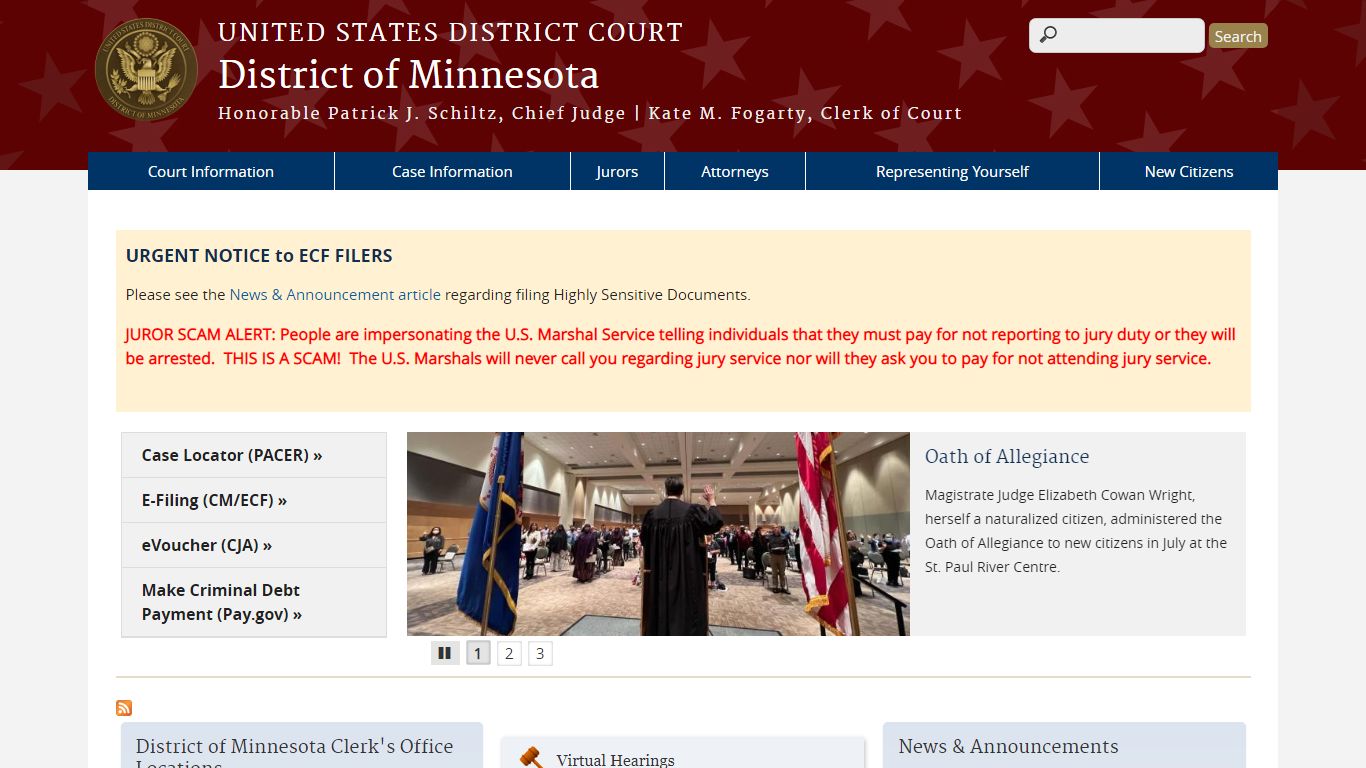
United States District Court for Minnesota
The Judicial Conference of the United States approved a new full-time magistrate judge position for Minnesota in early 2022. This addressed a 12% increase in civil case backlogs over three years. Judge Patrick J. Schiltz became Chief Judge on July 5, 2022, bringing 22 years of federal litigation experience. Under his leadership, the district plans to expand alternative dispute resolution and launch a new e-filing portal for 45,000 annual filings.
Accessibility and Public Support Services
The Minnesota Judicial Branch maintains strict accessibility standards across all digital platforms. Users can report barriers through a dedicated email (accessibility@mncourts.gov) with responses within 10 business days. All systems support screen readers, keyboard navigation, and high-contrast modes. Video tutorials demonstrate how to use search tools and download documents. Live assistance is available by phone during business hours.
Contact Information and Official Resources
For technical support or accessibility issues, email accessibility@mncourts.gov. The Minnesota Judicial Branch website (https://www.mncourts.gov/) provides official announcements and policy updates. Phone support is available at (651) 291-5200 Monday through Friday from 8 a.m. to 4:30 p.m. Central Time. Offices are closed on federal holidays. All services follow Minnesota state laws and federal regulations.
Related Search Terms and Services
- Certificate Of Citizenship Number
- System Cases
- People Background Checks
- How To Find Where Someone Lives With Their Name
- Cherokee County Court Records Database
- Bay County Florida Criminal Records
Frequently Asked Questions
Courts Mn Us provides comprehensive digital access to Minnesota’s judicial system through multiple secure platforms. Users can attend remote hearings, search court records, file documents electronically, and manage guardian reports—all from one unified login system. The technology prioritizes security, accessibility, and efficiency while serving over 120,000 monthly users.
How do I access Minnesota court records online?
Visit the Minnesota Court Records Online (MCRO) portal at publicaccess.courts.state.mn.us. You can search by docket number, party name, or date range without creating an account. For frequent access, register for a free MyCourtMN account to save searches and receive alerts. The system includes video tutorials for first-time users and live chat support during business hours.
Is remote hearing technology secure for sensitive cases?
Yes. All remote hearings use Zoom for Government with FIPS 140-2 validated encryption and 256-bit AES-GCM protection. Data stays in U.S. government data centers with no third-party access. Participants must authenticate before joining, and recordings are stored securely. The system meets federal and state privacy laws for legal proceedings.
How do I become a certified court interpreter in Minnesota?
Apply through the Interpreter Resource Management Application (IRMA) at irma.courts.state.mn.us. You’ll need current background checks, language certification, and proof of training. The system verifies credentials against state databases before approving assignments. Training programs are available through the Minnesota Judicial Branch for new interpreters.
What if I can’t access MCRO due to a disability?
Report accessibility issues to accessibility@mncourts.gov or call (651) 291-5200. The Help Center offers video guides with captions and screen-reader-friendly instructions. Staff respond within 10 business days and provide alternative formats when needed. All systems comply with Section 508 and Minnesota accessibility laws.
Can law firms integrate MCRO with their practice software?
Yes. Authorized firms can use the secure MCRO API launched in March 2023. This allows automatic retrieval of case data into practice management systems. Access requires token authentication and approval from the Minnesota Judicial Branch. Technical documentation and support are available through the MCRO Help Center.
How often is court data updated in MCRO?
New filings appear in MCRO within 24 hours of submission to the court. Docket entries, motions, and judgments are processed nightly. Users with MyCourtMN accounts can set email alerts for specific cases. The system handles over 1.5 million document requests annually with 99.9% uptime.
What happens if my MyCourtMN account gets locked?
Accounts lock after five failed login attempts and reset automatically after 30 minutes. You can also reset your password immediately using the “Forgot Password” link. For urgent issues, call (651) 291-5200 during business hours. The system sends email alerts for suspicious login attempts from new devices.